Episode Transcript
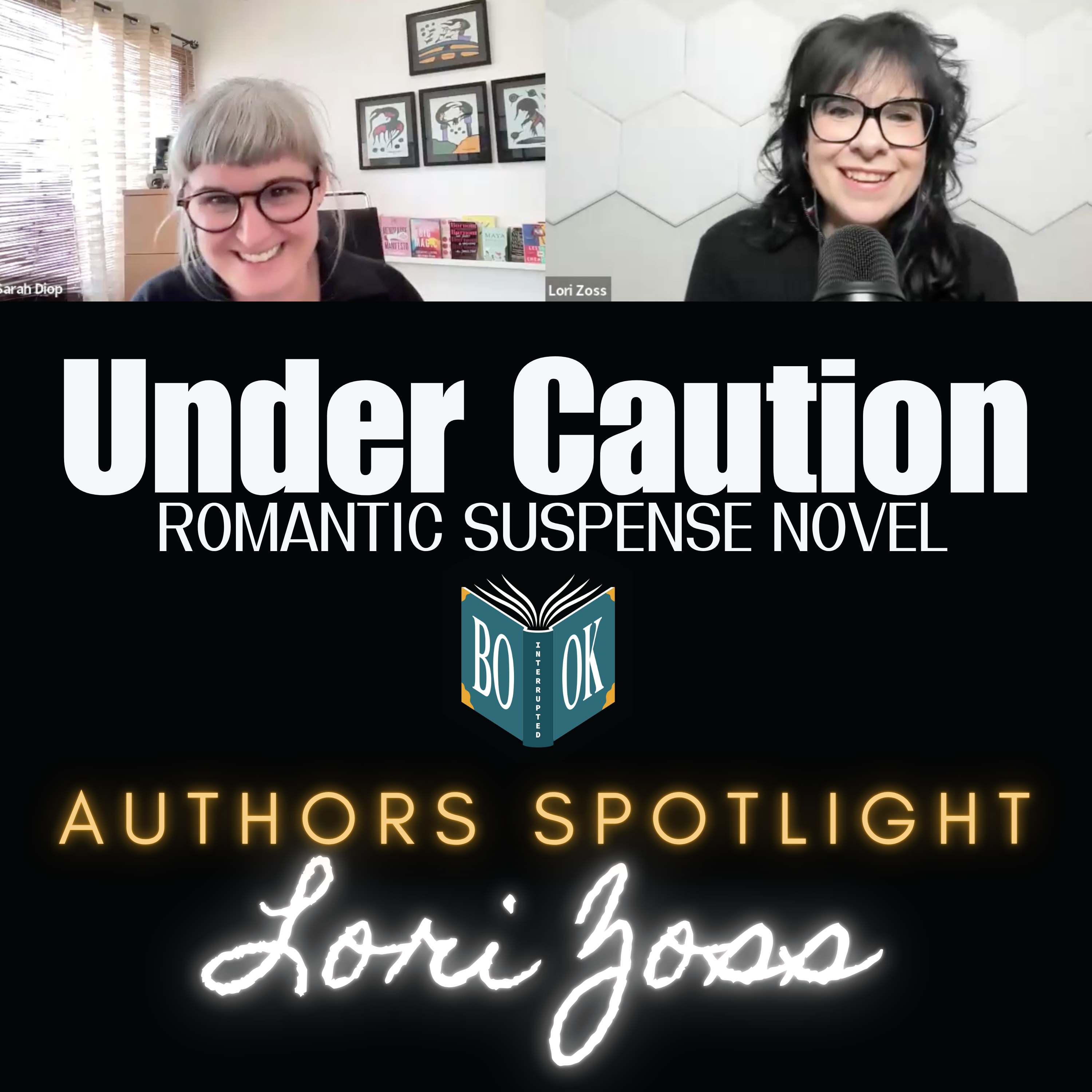
[00:00:00] Speaker A: Welcome to the Author Spotlight. On this episode we have Laurie Zos and her book Under Caution, which is a romantic suspense.
Yes.
[00:00:10] Speaker B: Thanks for having me.
Great. Thank you.
[00:00:13] Speaker A: Why don't you let me and the listeners know why we should read your book.
[00:00:16] Speaker B: Well, I'm an avid reader. I love to read fiction. I love to read adult fiction of all kinds, but especially suspense. I took it from the point of view of the type of reader that I am. So I'm a busy entrepreneur. I like to read on airplanes and I like to read something that's going to get me in fast and get me out, but it's going to give me enough that I can fantasize for a while. Right. I can submerse myself into a completely new world, but I don't have a lot of time to build into a story. I want you to get me right in. So that's how Under Caution is really written. I have a strong prologue that gets you right into who the villain is. You get to know my characters really fast and it's written with a very fast paced, so I have a lot of rich dialogue. I've just had a lot of feedback from readers that, wow, I read this in like two days. Or I do like to say that for busy women who do travel, you can fly from New York to LA and you can finish the book. It's about 60,000 words. My chapters are specifically short and I know like for me when I'm reading fiction, I like to feel accomplished in what I've read. So I specifically wrote short chapters with more frequent chapters because I just feel people like to feel accomplished when they read. And I never want you to feel like if you're reading late at night that, oh gosh, I want to finish this chapter but I keep like falling asleep. Right.
That shouldn't be an issue here for the most part because, you know, it just keeps going.
So in terms of the why, I think that if you are kind of a busy person and you're really trying to bring more reading into your life, then this is a great option for you. It's a great option any time of year that you're looking for something to kind of escape quickly. And it's got a really good balance of suspense and of romance. So the, the core idea of the book, it's centered around Daisy Cray, who is a successful stock car driver, the winningest female that's ever been in stock car driving. And she has an on again, off again romance with her biggest competitor, Jackson Wyatt. And but the suspense part of the story really comes in from a formal rival who has it out for her and is trying to hunt her down.
And his name is Lumen Ross. And he also has a very, very healthy knowledge of AI and uses it to his advantage to try to capture her and try to take over her world. So there's a lot going on. You've got the romance, you've got the suspense, and there's some fun stuff in it, too. I like to write some sub characters that provide a little comic relief.
The reaction's been great. I've gotten a lot of great reviews in the sense of people just like the pace of the book and they like that it's a little more than just your typical suspense romance. There really is a message about female empowerment as well.
So those are maybe a couple reasons that you might want to read it. So. But we'll get you in and out quick.
[00:03:15] Speaker A: But we on Book Interrupted often talk about the love of small chapters. Yes. Especially if you're busy. Yes. The fact that you can just quickly whip out a chapter and go back to things you need to do. Because it's really hard when some of these chapters are just like, oh, yeah. They're like, okay, I'll just wait till night. I'll just wait. So then that takes forever to get through. Because if it's short, quick chapters, you can quickly read a chapter. Go make dinner, take care of the kids.
[00:03:44] Speaker B: Exactly.
[00:03:44] Speaker A: Whatever task you need to do. And then quickly go back and read another chapter. Yeah. So great. When they're quick chapters. I also read a review about the male lead. I read a little bit of your book.
So it was quick. I was like. After I read the second chapter, I was like, because you sent me a Link for your YouTube station. You give a little a teaser of the audiobook on your YouTube station. So I listened to that. Yes. And when I finished chapter two, I was like, oh, wait. Oh, that's it.
Shoot.
[00:04:13] Speaker B: So you gotta come back for more.
[00:04:15] Speaker A: Exactly. So I will be picking up your audio book on Apple for sure.
[00:04:19] Speaker B: Great.
[00:04:19] Speaker A: Great. And checking that out. But I read some reviews about Jackson. There's someone. One lady wrote which I thought was so funny. She was like, do men like Jackson really even exist?
[00:04:31] Speaker B: Because she was. I remember that wish.
Yes. And I think that that's why it's fiction. No.
That's why I can create a world however I want it. Right.
[00:04:43] Speaker A: Yeah.
[00:04:43] Speaker B: So the whole idea is for busy women to escape.
Does he really exist? Probably somewhere. You know, I happen to have the power of creating the gentleman that I wanted to compliment Daisy.
[00:04:57] Speaker A: That was great. The reviewer gave you a five star.
[00:04:59] Speaker B: She was like, yes, yes, I know.
Yes.
[00:05:03] Speaker A: So why did you make that about race cars?
[00:05:07] Speaker B: Yeah, yeah, yeah. So I do want to make sure people understand racing is just the backdrop. It's not about racing. It just happens to be the environment she's in.
So I'm a big sports fan. Huge sports fan. I really wanted to create a character, a female heroine that could compete in a sport against male peers. There's not many options, but there is in race car driving. And specifically, I chose stop car driving, which is the larger car. People might know it as kind of like nascar. That's the kind of car.
[00:05:40] Speaker A: Yeah, nascar.
[00:05:41] Speaker B: So I wanted to specifically find a sport where a woman could compete with a man on the same track, for lack of a better term. And I knew a little about stock car driving and then started watching more of it. I went to a stock car driving event in Nashville, which happens to be where a big portion of where my story takes place, at the Nashville Speedway. I thought it was perfect because it was able to kind of reflect my love of sport and put my heroine in a situation where she is kind of one of the best drivers in her sport for full of men.
And how do people deal with that? And that does come up as a dynamic. Even though it is suspense, romance, it does come up as quite a little bit of a dynamic. With the relationship with Jackson, I just loved kind of delving into it. And then just the whole idea of speed. It kind of really also reflected how I like to write. So when. When you are in a very fast situation with cars, it's. It's like a fast situation with the reading, and it just really worked well with what I wanted to accomplish.
[00:06:46] Speaker A: So I really liked it. Because a lot of times romances, they have. She's a cook or.
[00:06:51] Speaker B: Right.
[00:06:52] Speaker A: You know, like, they're doing very domestic or very feminine angle.
[00:06:56] Speaker B: Yes.
[00:06:56] Speaker A: Jobs. And that's where it came up. Like, I really like that idea of, like, a strong female killer and he's not saving her. She's the. That's right. Right. She's the lead.
[00:07:08] Speaker B: That's right.
[00:07:09] Speaker A: I really like that dynamic. Just.
[00:07:12] Speaker B: Thank you.
[00:07:12] Speaker A: Like, as a woman.
[00:07:13] Speaker B: Yeah. Thank you. That was with intention. Definitely. That was definitely with intention that I did that. Because you can be a strong woman and still deserve a strong, you know, romantic interest in your life. You can have both.
[00:07:26] Speaker A: Yes. And I think that we need more strong female characters.
[00:07:30] Speaker B: Yeah.
[00:07:31] Speaker A: The way you wrote the intro, it wasn't something that Seemed absurd. This is her dad's business, so obviously she knows all about it and she knows how to fix cars, and that's her life. That's just normal. Yes, you normalized it, so it wasn't like an issue. But I like that it's the background because that's real life. I actually had, growing up the exactly same situation. One of our neighbors, he was a race car driver, and his daughter Penny took over his car when he.
[00:07:58] Speaker B: Oh, wow. There you go.
[00:08:00] Speaker A: Right. It's real. That's true. Those things happen. I feel like we're not represented that way.
[00:08:06] Speaker B: Yeah.
[00:08:07] Speaker A: And it's important. Representation is important in. Yeah.
You know.
[00:08:12] Speaker B: Yeah, absolutely. I completely agree. And, you know, I do like to read romance suspense. And there was never something for me that had that. You know, somebody said, lori, your book is like a mix of Colleen Hoover and the Fast and the Furious. Like, oh, I. I kind of like that. Okay, that's. That works out well. So I'll. I'll take that.
[00:08:34] Speaker A: That's great.
[00:08:36] Speaker B: Yeah.
I've always had this real yearning to write adult fiction. Now, in the past, I have written a children's book called A Bed for Fred. I wrote that 12 years ago. And then a couple years earlier, I wrote a business book called the Boardroom Playbook, which is about getting corporate funding. But I've always had these stories inside of me, and I would keep a journal of just kind of running stories.
And I just made the decision, I need to get this out of me. I need to write. So my journey is really about being an entrepreneur and finding the time, having the discipline to start writing, even when you have a lot going on in your life. Right. With both personally and with your business.
So really, the journey for me was, you know, really deciding on what my story was going to be and then just building in the discipline of. I was writing every night, you know, between 7pm and maybe 10pm and just whether it was good or bad, I wrote. You know, there are times where you sit down and you write and there's, you know, a few minutes of content, and there are other days there's, like, lots of content. And no matter what was going on, I was trying to write at least three or four times a week.
So the journey for me was about the balance that you can do both if you have the discipline to do it. And the journey in terms of choosing self publishing.
I had self published my business book.
I had went with traditional publishing for my children's book. And as I looked at both, and because of my background as an entrepreneur and being a business person, I just really felt, you know what, I could do this on my own because to be quite frank, when I worked with a publisher, I can't say I was all that impressed. There was a lot that fell on me anyway that I felt I could do better. And I liked owning the business process. Not every person likes that, but for me that worked. So in a nutshell, kind of what the journey was in terms of balance and just building in the discipline to get it done.
[00:10:47] Speaker A: We've had on Book Interrupted, one of our members. Yeah, they had a similar experience that's working with publishers.
[00:10:54] Speaker B: So yeah, yeah. And everyone's experience is different. You know, I don't think there's one wrong or right way. It's what works for you.
[00:11:00] Speaker A: Someone wrote a blog post actually on bookinterrupted.com that talks about self publishing and the difference. But yeah, everyone has their own thing. But I have heard that you end up doing a lot of the work anyway when you work with publishers. So yeah, it's a good perspective.
One of the main questions I want to ask because I want to kind of go back to you're entrepreneur, you started your own business, you went from the, you know, executive boardroom, working for someone else. I want to get a little bit more into. You did this book like in the evenings when you had time. So yes, I kind of want to touch on that point because yes, creativity is so important for, you know, being your authentic self. So if you could touch a little bit on balancing like your creative passions with like running your own business. Because I think a lot of times women generally, we've taken on so much and then yeah, you know, we read a book on Book interrupted called the 4% fix. And I've brought this up a lot.
She's a writer, Canadian writer. Yeah. She said to take the first slice of cake for herself.
[00:12:04] Speaker B: So I like hers.
[00:12:05] Speaker A: It's like a kind of like personal growth. She is a writer and writes a whole bunch of books and someone told her to write a non fiction in the morning. It doesn't matter. She writes. That's what she does in the mornings. But yeah, she's saying you have to take a slice for yourself.
[00:12:18] Speaker B: Right.
[00:12:18] Speaker A: She suggests the morning because she's like, if you don't take it in the morning, maybe you don't do it, but it's important that you have a slice for you. Or then it's like, what are we doing? Like we're constantly taking on all these responsibilities, you know, mental load and all these things, and then we don't have any left for us. And I think. Right. Creativity is the most important.
[00:12:39] Speaker B: Yes.
[00:12:40] Speaker A: You're expressing yourself.
[00:12:42] Speaker B: Yeah.
[00:12:42] Speaker A: You know, that's your authentic self. It's not something you're trying to accomplish necessarily. So anyway, I just wanted to talk about how you balanced out doing your creative project on top of, you know, running your business.
[00:12:54] Speaker B: Yeah. The hardest part is getting started. I think anybody will tell you that, because once you're in the rhythm, I find that, you know, you're in the rhythm, but getting started and creating the discipline to write is imperative because you can have an idea, but it stays in the ether forever. Right.
And I had a little journal of ideas that I would write down, and I finally just kept going back to this idea about a woman in the race car world. She's kind of involved with her biggest rival, and then here comes this villain. So I'm like, all right, I'm gonna. I'm gonna work with that. And I'll tell you, I think what helped me was, quite frankly, I was on the precipice of my 50th birthday, and it was a goal.
I want to get this done before my 50th birthday. So some of it for me was just in the time of life that I'm in, this was a goal I really wanted to accomplish. Because I've had so many start and stops with adult fiction over the years. It's like, okay, this is the time. So I had that goal. And then in terms of the discipline of how to write, I wrote at night.
But the funny thing is, I am a morning person. But what I found was I couldn't really write in the morning because I was thinking about all the things I needed to do in my business.
[00:14:09] Speaker A: Right.
[00:14:09] Speaker B: And I. So for me, it was easier once the day was done. I've had my dinner and it's quiet, and then around 7 o', clock, I'd come up to my office and then I'd start writing. But before I started writing the actual chapters, I am a big fan of an outline, and I am a fan of working backwards. You know, there's all different theories on, you know, outlining or, you know, save the cat, all that. You know, all that. All that stuff. Right.
[00:14:34] Speaker A: Yeah.
[00:14:35] Speaker B: So what works for me is I knew how I wanted to start the story.
I knew what was going to be the pivotal, and I knew what my red herring was, and I knew how this was going to end.
I decided to start with an outline first of what needs to happen. To get to these pivotal moments. And I visualize it almost like a movie. I'm very, you know, know, visual.
[00:14:57] Speaker A: Yeah.
[00:14:58] Speaker B: Then I wrote it the complete opposite. I went backwards and do I get to the same place?
And it's funny. And outlining that way, where I have two different outlines. I had different things come up that. When I got it together.
[00:15:10] Speaker A: Right.
[00:15:11] Speaker B: Anything good? This is. This is great.
[00:15:13] Speaker A: That's when we interviewed.
[00:15:14] Speaker B: So I had an outline. So I never came to my laptop, my computer blind. Had kind of a prompt where I needed to go.
So some nights I would write and maybe it was just a longer day. And I would just kind of write phrases. Here's what I want to happen in this chapter. Almost being a director, here's what I want to happen. Other nights I would be extremely specific. I've got dialogue in my head. I've got narrative. I would write more specifically. So there were nights where maybe I wrote for 20 minutes to a half hour. And there were other nights where I was cranking it out. I went from like 7 to 10.
That was the discipline I used. And I would write for three or four times a week. I also would write if I was traveling. I do travel in my business, and I'll write when I'm in my hotel room. And it actually works to your advantage because I had a couple of instances in the book where there's travel going on. So I'm physically traveling. So I'm in that mindset, you know, that kind of worked out really nice. My biggest advice is that outline however you want to outline. And there's again, there are great books out there. There are great theories on how to write a suspense romance, but you want something that you're not going to be too fixated on it. I think sometimes with some of these frameworks for how to write best, people can get too fixated on it, and then they don't do anything. You know, okay, well, your chapter three, by then this should happen.
No, I, you know, well, let's just kind of let it flow.
[00:16:43] Speaker A: Let's save the cat.
[00:16:44] Speaker B: That's exactly right.
[00:16:46] Speaker A: You're like, what?
[00:16:47] Speaker B: Right. Exactly. I just kind of went in with a no rules approach. And I knew at the front of when I was writing, I was not going to be taking this to agents or to publishers. So that also brought me freedom. Like, I can write this however the heck I want. So, you know, for instance, my book, it does shift point of view, but it does stay in third person narrative. There is kind of a point of view shift on Each chapter, but it sticks within some core characters. You know, there are some agents or publishers that would be against that. I think it works. You know, I like to have different scenarios going on in different perspective, but I make it very known upfront. As you get into the book, it's like, not like there's guesswork, but there are some people that are extremely against that. So that's their call. But again, knowing that I was going to self publish, I didn't have to worry about these kinds of rules.
That was freeing to me. I can't speak from the perspective of if you think you're going to shop it around to a traditional publisher, but I do feel as though if you just kind of let go of what you think you should do and just start writing, even if it's just phrases that's going to get you into this cadence of writing. When you're not doing it, you're going to feel like, oh, I need to do that.
And in terms of time of day, again, I think it's just what works best for you. I do like that analogy. You need your slice of cake. But I think I knew myself well enough that I could have my slice of cake much later in the day and still be effective.
[00:18:13] Speaker A: Yeah. There was one of the other members of Book Interrupted. She's a writer, but she's also has the sleep type of wolf, so she's gone. So she would never write anything in the morning.
[00:18:26] Speaker B: Yeah.
[00:18:26] Speaker A: And that's when we interviewed the author and she was like, whenever works for you, but you need to take a slice. And I think that the fact that you're like, okay, so I have to do this at least three times. Yes.
I think that's amazing because a lot of productivity hacks and stuff are like, make a commitment. Maybe you do five days that week or seven days, but you can to yourself for three. And the fact that you let yourself off the hook, that you could just do the 20 minutes of not actually really going at it, but like saying, okay, I want this to look like this because. Because you're still working on your project.
[00:19:04] Speaker B: That's right.
[00:19:05] Speaker A: Committing to yourself. But at the same time, it's not making this steadfast rule.
I'm big on productivity.
Yeah.
[00:19:14] Speaker B: Good. Yeah.
[00:19:15] Speaker A: But I do find also that if you make it too rigid.
[00:19:19] Speaker B: Yes.
[00:19:20] Speaker A: And you break those promises to yourself, then you just end up quitting. Never failed. That's right.
You've already done it so many times.
[00:19:28] Speaker B: Yes.
[00:19:29] Speaker A: Yeah.
[00:19:29] Speaker B: Yeah. I think the whole message is time is not about quantity. It's about quality. So if you really frame it that way, we as human beings tend to do better with small achievable goals. So maybe when you start the process, maybe your goal is just to write once a week for 20 minutes and then you build it up from there. Right. Sometimes writers feel like a time crunch now, unless you have a deadline from someone, which is completely different. If you are kind of writing this on your own, work within your peak times of day and give yourself grace and space.
I don't think there's anything worse than just sitting there and staring at the screen and creating a discipline that, well, I have to stay and sit here, but nothing's coming that's going to make it worse.
I just knew myself, and I know myself well enough when I'm not in the zone.
So when it's like that, I'm like, okay, I'm going to make a commitment. Here's what I want to write next time, and. And I'll type in here's what I'm trying to accomplish. That much you can get done. Your brain will allow that.
[00:20:27] Speaker A: Yeah.
[00:20:28] Speaker B: And then you walk away. You come back the next day or two days later and you start working on it with a fresh set of eyes and it works out.
[00:20:35] Speaker A: Yeah, I agree with that. I'm an entrepreneurial strategist, so some of my. Yeah. One of the things I say to them is when you're writing a to do list, like launching an enterprise.
[00:20:45] Speaker B: Yes.
[00:20:45] Speaker A: You got to put things on the to do list that are really easy for you to accomplish.
[00:20:50] Speaker B: Yes, that is so true.
[00:20:51] Speaker A: Only put big ones you won't get through through the list. But let's say you're having a really stressful day or a big thing happens. If you have something really easy, just start doing the easy ones. Because just checking off the list.
[00:21:03] Speaker B: Yes.
[00:21:03] Speaker A: Give you the momentum you need to keep going. Otherwise.
Yeah.
[00:21:08] Speaker B: I don't know if you're of other authors you've spoke with have talked about this, but don't worry about writing an order either. If there's a certain chapter that makes you excited, work on it. I kind of start in order, but then if I've got something in my craw, as they like to say, there's something I got to work out, I'll start writing it. Maybe just, you know, a couple paragraphs. Maybe they don't even make sense. But then at least my mind has processed. It went away and I can come back to it. So also don't get hung up on order. I think outline order is important. But once you're in the writing process, kind of just go with what feels right for you in that moment.
[00:21:44] Speaker A: Yeah, I think that's good advice as well.
[00:21:45] Speaker B: Yeah.
[00:21:46] Speaker A: And also, I took a masterclass with Margaret Atwood. I don't know.
[00:21:49] Speaker B: Oh, wow. Oh, my gosh.
[00:21:52] Speaker A: No, no, no. On masterclass, I was.
[00:21:54] Speaker B: That's okay. That's great. I love it.
[00:21:56] Speaker A: I love her. What she says is, no one's going to see the first draft but you anyway.
[00:22:01] Speaker B: That's right.
So true.
[00:22:03] Speaker A: So hung up on it.
[00:22:04] Speaker B: Yes.
[00:22:04] Speaker A: Just write it. The different order is a good idea, I think. Whatever moves you, write that. And then you can change anything whenever you want.
[00:22:12] Speaker B: No, that's right.
[00:22:14] Speaker A: First draft anyway.
[00:22:15] Speaker B: That's exactly right. Yeah. I went through about. Because I hired in the process two different editors. I hired a copy editor specifically for the right periods. Spelling, word choice, all that logistical stuff. And then I hired an editor just to look for the holes, you know, what did she like? What did she not like? And they were both excellent investments.
So the version of the book that's published is probably the sixth or seventh edit.
[00:22:45] Speaker A: Yeah.
[00:22:46] Speaker B: So don't be afraid of a good. Stephen King says that in his book on writing, don't be afraid of a good edit, which I think is funny because his books are so long. Right.
[00:22:57] Speaker A: No, but I agree. Like, I think that's another thing that people don't realize when they're doing self publishing, that editing is part of that.
[00:23:03] Speaker B: Yeah.
[00:23:04] Speaker A: Like, it's not just, you know, you putting something out. Your first drop just out into the.
[00:23:09] Speaker B: I mean, you could if you wanted, but if you want to be taken seriously. Right. You. You do need to put an investment in finding a good editor. And, you know, there. There's so many resources now online where you can find editors and, of course, word of mouth, what have you. So, yeah, I'm a big fan of. Of really investing in a good edit. A really good edit. And you can't. You gotta take your ego out of it and make decisions that, you know, at the end of the day, you're the decision maker in terms of self publishing. I would say that in terms of my editor's comments, I took 98% of what they recommended. Maybe there was a small 2%. I'm like, no, that's gotta stay in.
Or they'd give me a different perspective. I'm like, no, that doesn't feel right. But for the most part, they were spot on. Yeah.
[00:23:54] Speaker A: Amazing.
[00:23:55] Speaker B: Yeah. And I do want to say this about writing in relation to my business.
I Found that when I started to really put in the practice of writing continually, not only did it help me with balance, but it helped me process my day. And let me tell you why. Maybe I had a really rough day. Something happened in the business sense, I could play that out in my fictional world and write about it, you know, or take attributes of things that I've seen or happen that day that maybe really frustrated me, and I'm going to put them into my villain. It's like therapy. It helps you kind of work out what's going on.
So while you are building this world that you hope people want to enter for a little bit, you also are kind of utilizing it to your advantage to kind of work out your own stuff. And I just found that I was a happier entrepreneur and more balanced entrepreneur when I was writing. I'm actually in the process of starting to outline the second book because I do see this as a trilogy and getting excited about the pen to paper and keyboard to screen work again.
[00:25:00] Speaker A: So I was going to ask you that because some of the reviews said there's a cliffhanger, so. So, yes, that's great. So it's going to be a trilogy. Wonderful. Yes. You're just starting to write the second
[00:25:10] Speaker B: book, so I'm just starting to outline the second. Yes, correct. So it's funny because I know how I want this to end. Like, what is the ultimate end? I know more about book three than I know about book two. I have to remind myself, because I'm really excited about what I want to do in three, but I have to remind myself that book two needs to be a pivotal bridge and still have that kind of force and speed. And so I'm kind of working on. On all of that. So. Yeah.
[00:25:39] Speaker A: To get people to the three.
[00:25:41] Speaker B: That's right.
[00:25:42] Speaker A: That's right.
[00:25:43] Speaker B: Yeah. Yes.
[00:25:44] Speaker A: So do you have any idea when you think that might come out?
[00:25:48] Speaker B: Yeah. So that's a good. Quite. You know, it's funny, your timing is really good. I was thinking about that. So I'm outlining now. But at the same time, I'm outlining, I'm doing publicity for. For the book and the audiobook, which is being released. So I'm balancing those two things. But what's good about that, especially in conversations I've had specifically about the audiobook, I'm listening and I'm going back. So some of the details that maybe I would have not thought of right away, I'm reminding myself, I'm like, oh, okay, great. So that helps me as I'm outlining the second book. So being in kind of the promotional phase of Under Caution or while I'm outlining Book two, I think is actually very helpful in my outlining strategy. So with all that being said, I do want to take most of the summer to probably outline and start to play around with some things maybe like mid-2027. Let's, let's see. We'll see. I'll come back and we'll see how well my yeah, I did on, on on that.
[00:26:49] Speaker A: Let us know.
[00:26:49] Speaker B: I will. Thank you so much.
[00:26:51] Speaker A: So, listeners, if you'd like to pick up Laurie's book Under Caution, you can find it on the Book Interrupted website, www.bookinterrupted.com shop and it'll be in our shop there and you can just click on it and pick up her book. I will also put a link in the show notes for the YouTube if someone wants to listen to the audio book there. And it's also available on Audiobook on Amazon as well. Great. Thank you so much, Laurie, for being on the show.
[00:27:19] Speaker B: Thank you, Sarah. I enjoyed our time together today.